
Your Guide to Building a Custom Aquarium
Are you thinking about building a custom aquarium? Whether you’re just starting out or you’ve kept tanks before, knowing the fundamentals can save you time, money, and hassle. This guide answers the most common questions about custom aquarium design, materials, equipment and maintenance.
If at any point you’d like expert guidance tailored to your specific project, get in touch with our team at Aquarium Solutions. We’re here to help.
SECTION 1: PLANNING YOUR AQUARIUM
What size aquarium do I need?
The right size depends on a few things. What fish or coral are you hoping to keep? How much space do you have? What’s your budget? And honestly, how much time do you want to spend maintaining it? Larger tanks are generally more forgiving because the water stays more stable, but they do need more equipment and ongoing care. Most beginners find that a 40 to 75 litre tank is a good starting point, though custom builds can range from small desktop tanks around 20 litres to massive installations over 1000 litres.
Here’s the thing: a well maintained smaller tank will always outperform a neglected larger one. Pick a size you can realistically look after, then stick with it.
How much does a custom aquarium cost?
- Filtration system: $400 to $3,000+
- Lighting: $150 to $1,500+
- Heater and temperature control: $100 to $800
- Substrate and decorations: $150 to $750
- Fish and livestock: $100 to $7,500+
A helpful rule of thumb is to plan for at least 40 to 50% of your total budget going toward equipment and support systems rather than the tank itself.
Glass or acrylic, which is better for my custom aquarium?
Both have their pros and cons, so it really comes down to what matters most to you.
Glass:
Pros: Crystal clear, doesn’t scratch easily, doesn’t yellow over time, usually more affordable
Cons: Heavy to move, can leak if not built properly, hard to drill holes
Acrylic:
Pros: Lightweight, very strong (won’t shatter), can be shaped into custom forms, easier to drill
Cons: Scratches more easily over time, yellows with age, higher upfront cost
For most custom builds, glass is the go to because it stays beautifully clear for decades. Acrylic works better if you need a specific shape or you’re worried about weight.
How long does it take to build a custom aquarium?
A standard custom glass aquarium usually takes around 4 to 6 weeks from the time you put down your deposit. This covers the design consultation, tank fabrication and quality testing. If you’re after something bigger or more complex with custom plumbing, overflow systems or special features, you’re looking at more like 8 to 12 weeks.
SECTION 2: EQUIPMENT & COMPONENTS
What equipment do I need for my custom aquarium?
The core equipment you really can’t skip includes:
- Filtration System
This removes waste and keeps water clean through three types of filtration: mechanical (catches debris), biological (handles nitrogen compounds), and chemical (removes toxins). You might use a hang on filter, canister filter, sump system or all in one filter, depending on your setup. - Water Movement
Powerheads or circulation pumps keep the water moving, which fish need. Air stones are optional depending on your setup. - Lighting
Standard LED lighting works well for most tanks, with full spectrum options if you’re keeping plants or corals. - Temperature Control
A heater for tropical tanks, a chiller for cold water setups, and a thermometer to keep an eye on things. - Testing and Monitoring
Water test kits let you check pH, ammonia, nitrite and nitrate. Digital monitors can track things continuously. - Substrate and Decoration
Sand, gravel or specialised substrate, plus rocks, wood, plants or artificial decoration.
What is an aquarium sump, and do I need one?
A sump is basically a secondary tank connected to your main aquarium, usually tucked away in a cabinet below. Water flows from your main tank down to the sump, then gets pumped back up.
Why have one? Several good reasons:
Increases total water volume (more stable chemistry), gives you a place to hide equipment like heaters and filter media, improves water circulation and oxygen levels, and keeps the main tank looking cleaner.
You don’t strictly need a sump for smaller tanks, but for anything over 75 litres or if you’re keeping sensitive fish, it’s worth serious consideration.
What is an overflow system, and how does it work?
An overflow (also called a weir) is what moves water safely from your main tank down to the sump. It stops the tank from overflowing while keeping the water level constant.
Here’s the simple version: as your main tank fills, water rises in the overflow box. Once it reaches a certain level, it spills over into a drain line. A pump in the sump then sends the water back up to the main tank. The cycle keeps going, creating steady circulation.
If you’re building a custom tank with a sump, an overflow system is pretty much standard and essential for preventing floods.
What's the best aquarium stand for my setup?
Your stand needs to handle the weight. A filled aquarium weighs roughly 1 kilogram per litre, so a 75 litre tank is going to weigh around 75 kilograms with water plus equipment.
You have a few options:
Custom built stands (designed specifically for your tank), pre manufactured stands (standard sizes, less flexible), or furniture grade stands (look great as part of your home).
Whatever you choose, it needs to:
- Be rated for the weight you’re putting on it
- Be level and sturdy with no wobbling
- Be placed away from direct sunlight
- Have power outlets and water access nearby
SECTION 3: DESIGN & CUSTOMISATION
What makes a good aquarium design?
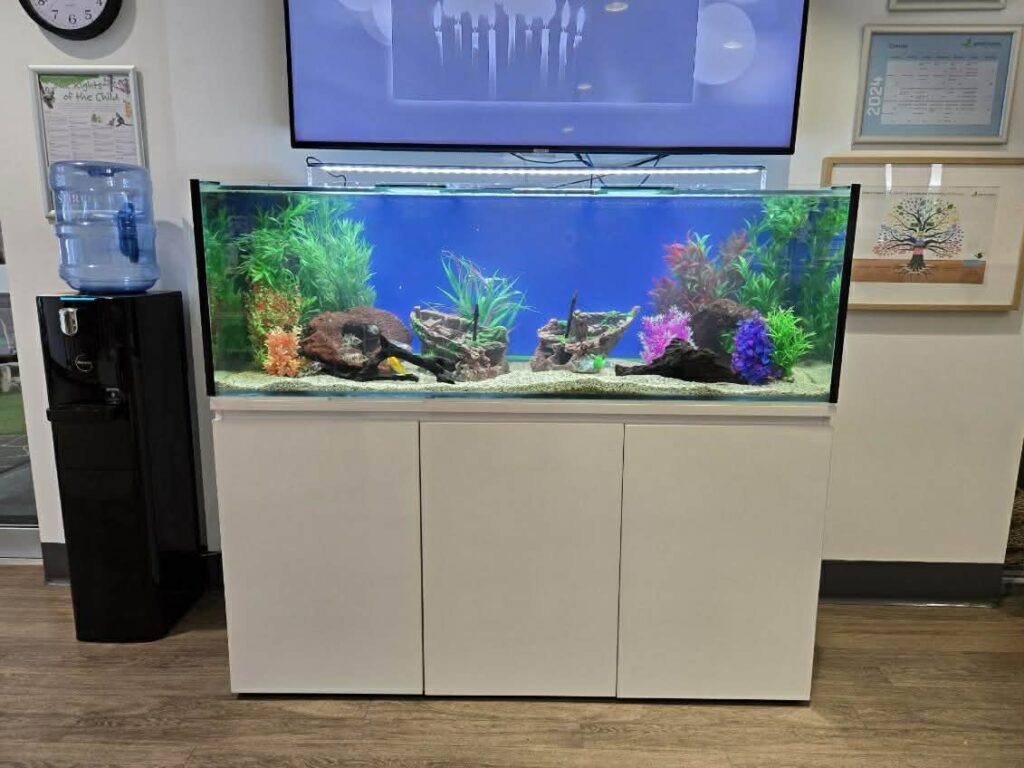
A good design balances four things:
- Functionality
Equipment needs to be accessible, water has to flow properly, and maintenance has to be realistic. - Aesthetics
Materials and colours that work with your space, a natural looking rockscape, balanced placement of plants or coral. - Biology
Fish need hiding spots, your livestock needs to match the water conditions you’re providing, and there has to be enough room for them to feel comfortable. - Sustainability
Water chemistry needs to stay stable, maintenance shouldn’t become overwhelming, and equipment should be reliable.
The best custom aquarium designs pull all four together. If you’re feeling unsure about any of this, talking to professionals who understand both the technical side and the creative side is worth your time.
Can I customise the dimensions of my aquarium?
Absolutely, that’s actually one of the big advantages of going custom. You can specify the exact measurements to fit your space or match your vision. Want it taller, wider or shallower than standard sizes? No problem.
Custom options include:
Your overall dimensions, glass thickness (affects strength and how clear it looks), which panels you want to view through, and special features like overflows or reinforcing bars.
Keep in mind that non standard sizes might add a bit to the cost and timeline, but it’s usually worth it for getting exactly what you want.
Can I integrate custom features like built in lighting or filtration?
Yes. Custom builds let you hide and integrate equipment directly into the design. Think built in LED lighting in a canopy, integrated filtration chambers, hidden overflow boxes, custom plumbing runs, even automated feeding systems.
The more you integrate, the cleaner and more polished everything looks. Working with your builder during the design phase means everything gets planned properly from the start.
SECTION 4: MATERIALS & BUILD QUALITY
What glass thickness should my aquarium have?
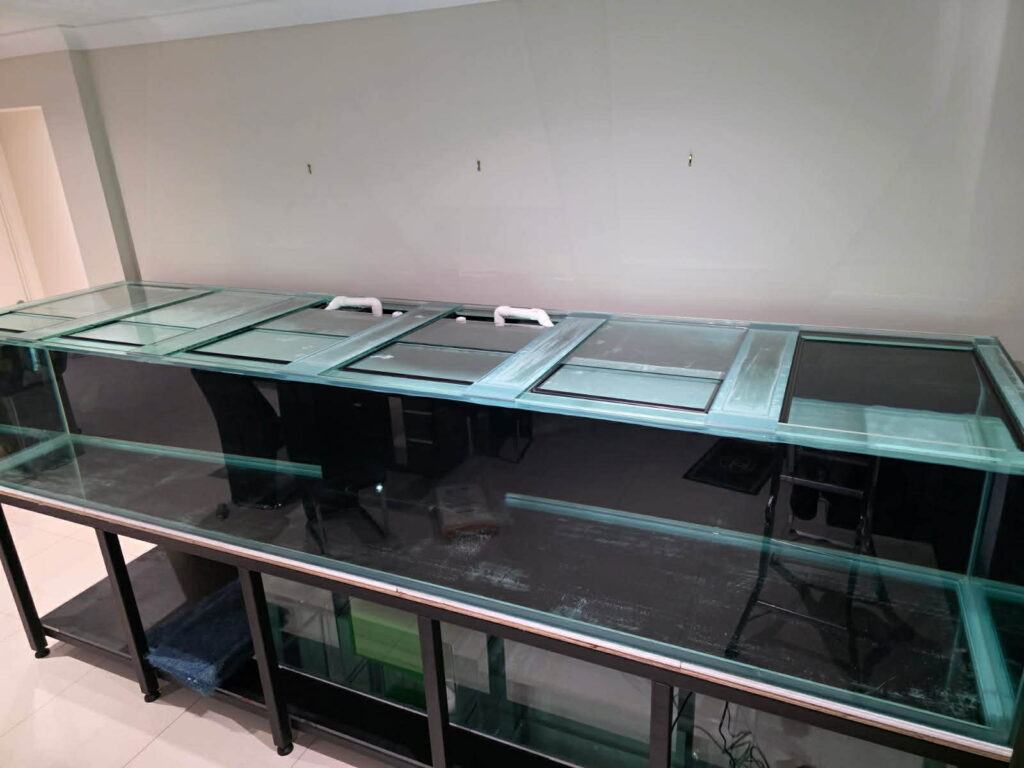
Glass thickness depends on how big your tank is and how tall the water column will be. Larger tanks need thicker glass to handle the water pressure safely.
General guidelines:
Up to 75 litres: 6mm glass
75 to 150 litres: 6 to 10mm glass
150 to 300 litres: 10 to 12mm glass
300 to 500 litres: 12 to 16mm glass
Over 500 litres: 16mm+ glass
Your builder will work out exactly what thickness you need based on your tank’s specific dimensions. Thicker glass costs more but gives you better durability and less risk of leaking.
How can I ensure my custom aquarium won't leak?
Leaks are a valid concern. To minimise the risk:
- Work with a builder who has a solid track record
- Make sure the tank has proper bracing and internal support bars (this reduces stress on the seams)
- Insist on high quality silicone sealant
- Ask for a factory fill test before delivery
- Check what warranty coverage you get for leaks
A well built custom glass tank, maintained properly, should last 20 to 30 years without leaking.
What's the difference between standard and custom glass?
Standard window glass has iron in it, which gives it a greenish tint. You can get aquarium glass in different options:
Low iron or “starphire” glass:
Crystal clear with no green tint, more expensive, ideal if you’re keeping colourful corals or planted tanks, and it photographs beautifully.
Standard aquarium glass:
Has a slight greenish tint, especially noticeable on thicker glass. It’s less expensive and still very clear. Fine for most freshwater setups.
If you’re investing in expensive livestock or doing a high end setup, low iron glass is often worth the extra spend.
SECTION 5: MAINTENANCE & CARE
How often should I clean my aquarium?
Regular maintenance keeps your tank healthy and looking great. Here’s a realistic schedule:
Weekly:
- Test water parameters (pH, ammonia, nitrite, nitrate)
- Feed fish properly
- Check that equipment is working
Fortnightly:
- Do a partial water change (around 20% of the volume)
- Clean the glass
- Remove dead plant matter and debris
Monthly:
- Clean or replace filter media
- Thoroughly clean the substrate if you have plants
- Check and clean pump intakes
How often you actually need to do these things depends on your bioload (how many fish you have and how much they eat), your tank size and how good your filtration is. A well established tank with good filtration needs less work than you might think.
How do I prevent algae growth?
Algae thrives when there’s too much light and too many nutrients. Here’s how to keep it in check:
- Limit your lighting to around 8 to 10 hours per day
- Keep nutrients down by not overfeeding (fish only need a small amount) and removing uneaten food
- Keep water moving with proper circulation
- Add plants or algae eating fish to compete with algae
- Clean surfaces regularly
A little bit of algae is actually healthy. It’s only a problem when it takes over.
What's aquarium cycling, and why does it matter?
Cycling is when you establish the beneficial bacteria in your tank that convert toxic fish waste into less harmful compounds. Before you add any fish, you need to let these bacteria colonies build up.
Here’s the process:
- Fish produce ammonia (toxic)
- Nitrosomonas bacteria convert ammonia to nitrite (still toxic)
- Nitrobacter bacteria convert nitrite to nitrate (much less harmful)
- Regular water changes remove excess nitrate
Cycling usually takes 4 to 8 weeks in a new tank. You can speed it up by adding beneficial bacteria supplements, transferring filter media from an established tank, or using plants which help break down nitrogen compounds.
Don’t skip this step. Fish in uncycled tanks suffer or die.
How often should I do water changes?
Regular water changes maintain water quality and remove accumulated waste. A good baseline is changing about 20 to 25% of the water weekly in an established tank.
What affects how often you need to do this:
Tank size (smaller tanks need more frequent changes), how many fish you have and how much they eat, how good your filtration is, and whether you have plants (plants help break down waste).
A 75 litre tank with a moderate amount of fish and good filtration might need a 20% change weekly. A 300 litre planted tank might only need one monthly.
SECTION 6: FISH COMPATIBILITY & BEHAVIOUR

What fish can I keep together?
Compatibility depends on a few things:
- Temperament
Aggressive species need more space and fewer tank mates. Peaceful species do well in groups. - Size
Big fish might see small fish as food. Similar sized fish are generally safer together. - Water requirements
The temperature, pH and water hardness need to match. Freshwater and saltwater fish can’t live together. - Territory
Some fish defend their space and need to be alone. Others naturally live in schools. - Diet
Some are predatory, others eat plants or algae.
Before adding any fish to your tank, do some research on each species. A good aquarium shop or online community can point you in the right direction for your specific setup.
SECTION 7: TROUBLESHOOTING YOUR AQUARIUM
What happens if there's a power outage?
Most aquariums stay stable for around 24 to 36 hours without power, depending on tank size and temperature. After that, things start to go wrong:
Oxygen levels drop (fish can suffocate), temperature changes (especially tough for tropical tanks), beneficial bacteria might die if it gets too cold, and ammonia builds up without filtration running.
If you’re in an area that gets power cuts:
Get a battery backed air pump, consider a generator for longer outages, or keep an emergency manual aeration method on hand like a battery pump and air stone.
My tank is cloudy. What's going on?
Cloudiness usually means one of these things:
- Bacterial bloom (new tank syndrome)
Common in new tanks, usually clears in a week or so. Do frequent small water changes to help. - Dust or debris
Often happens after cleaning. Will settle on its own in 24 hours. Avoid stirring the substrate. - Algae bloom (green water)
Too much light or too many nutrients. Reduce lighting, feed less and do water changes. - Particles from new substrate or decoration
Rinse everything new before adding it. A temporary water clarifier can help.
Most cloudiness sorts itself out with a bit of patience and basic maintenance.
My fish are acting stressed. What could be wrong?
Stressed fish breathe rapidly, dart around or hide too much. The most common causes are:
Poor water quality (test your parameters first thing), temperature swings (check your heater), not enough hiding spots (add more decoration or plants), too many fish for the space, aggressive tank mates, new tank syndrome (just needs time and water changes), or incompatible fish.
Test your water first. Most stress comes from chemistry issues. If the numbers are good, look at tank mates, temperature and whether there’s enough decoration for fish to feel safe.
READY TO BUILD YOUR CUSTOM AQUARIUM?
This guide covers the fundamentals, but every aquarium is unique. The best custom builds come from working with professionals who understand both the technical side and your vision.
Aquarium Solutions has designed and built hundreds of custom aquariums for homes and businesses across Brisbane, the Gold Coast and the Sunshine Coast. We can help you choose the right size and materials, design something that’s both beautiful and functional, handle all the technical details and build quality, and support your tank long term with maintenance.
If you’re ready to start your custom aquarium journey, contact us for a free consultation. If you’re keen to try it yourself but want some professional guidance along the way, give us a call on 0401 319 575. We’re happy to help.